Send Crypto Via Links
A UX audit for Peanut Protocol, a blockchain banking system utilising links to send crypto, driving a 40% growth in unique active wallets and attracting thousands of new users.
Overview
Peanut Protocol facilitates crypto transfers via URLs and QR codes and has around 15,000 daily active users.
The Problem
Users struggled with navigating the send, claim, and dashboard interfaces, leading to a high drop-off rate. New users were reluctant to connect their wallets to an unknown app and got confused about the swap function.
The Goal
Redesign the send, claim, and dashboard interfaces to streamline the experience, reduce friction, and support user growth by fostering a more intuitive and seamless journey.
6k
monthly SDK downloads
35%
growth in incoming Dapp transactions
40%
growth of unique active wallets
The Solution
- –Optimise send/claim user journeys: simplify steps for users to send and claim funds via links.
- –Add visual hierarchy: highlight CTA information, group contents by proximity, and make content scannable.
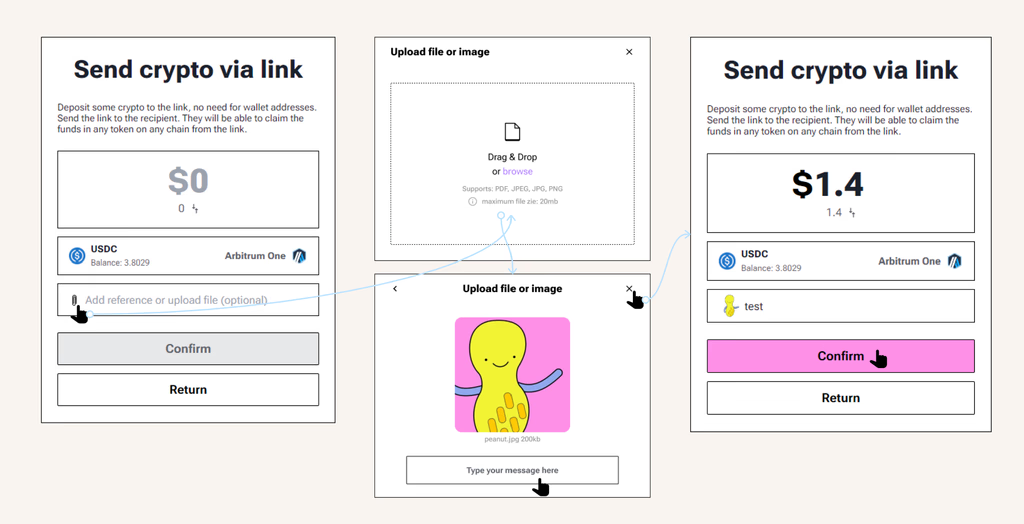
- –Improve onboarding experience: add instructional and error copy, introduce a points reward system, and add customised message upload when sending links.
Process
User journey mapping, ideation, and iterative design across send, claim, and dashboard
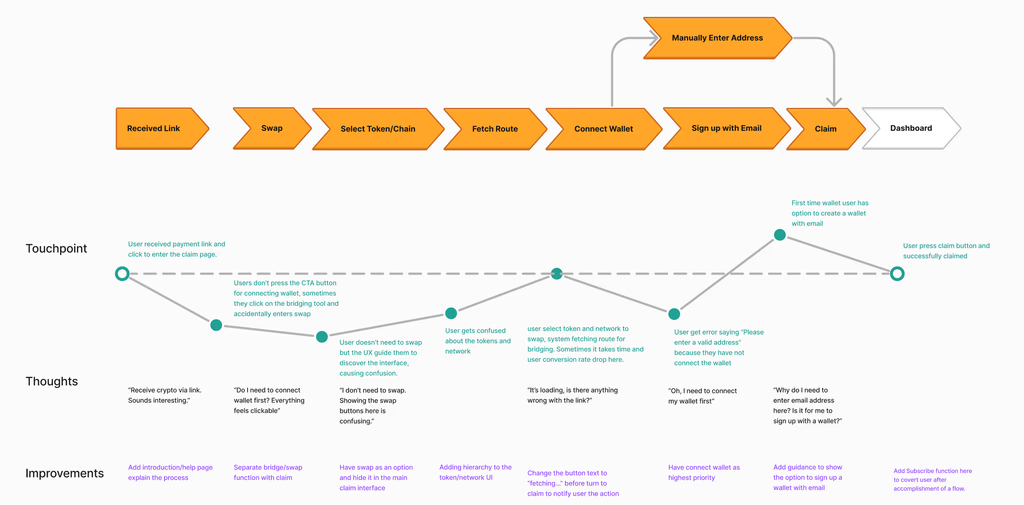
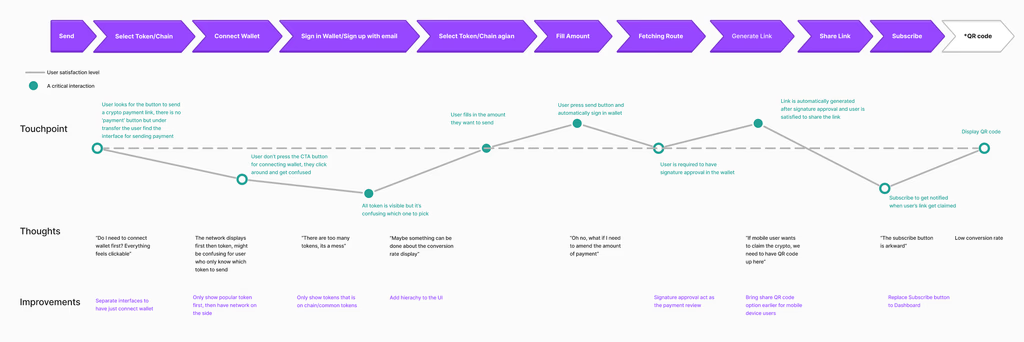
User journey mapping - identifying drop-off points
- ✓Mapped out existing user flows for send and claim, identifying pain points using qualitative and quantitative research methods.
- ✓Users had 3 options to enter the transaction amount, select the token/chain, and connect the wallet - causing drop-offs due to obstacles.
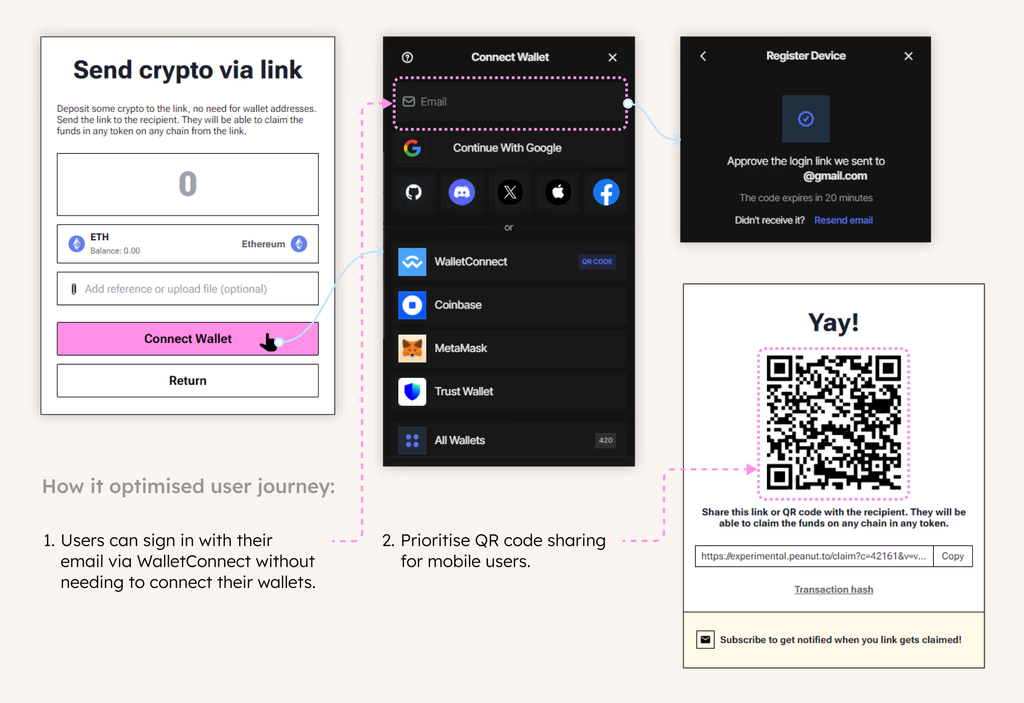
- ✓Redesigned with a linear flow that provides more open routes for users who have already connected their wallet, and added a review screen to both journeys.
Ideation - solving four key UX challenges
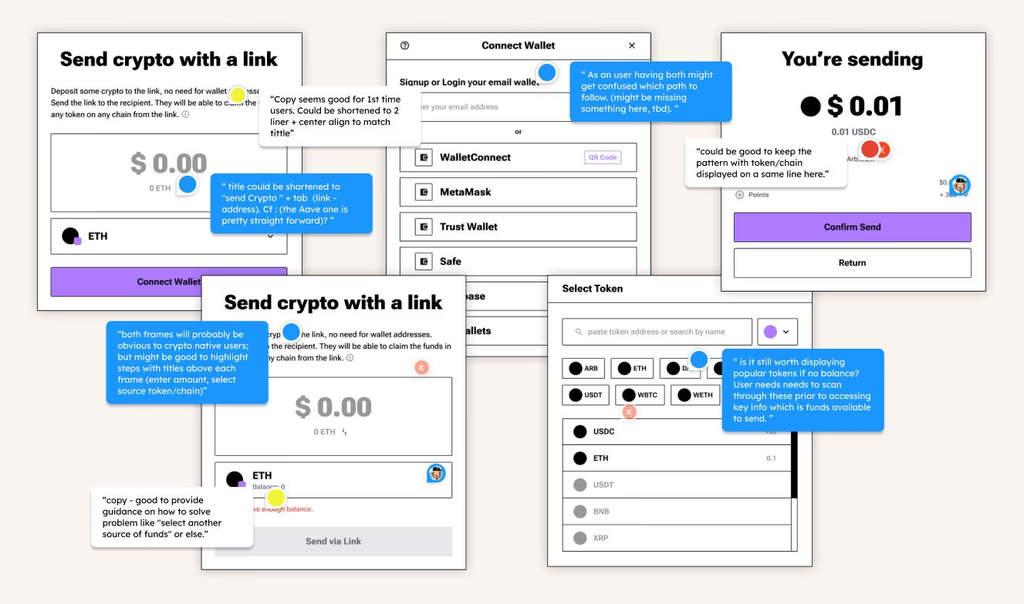
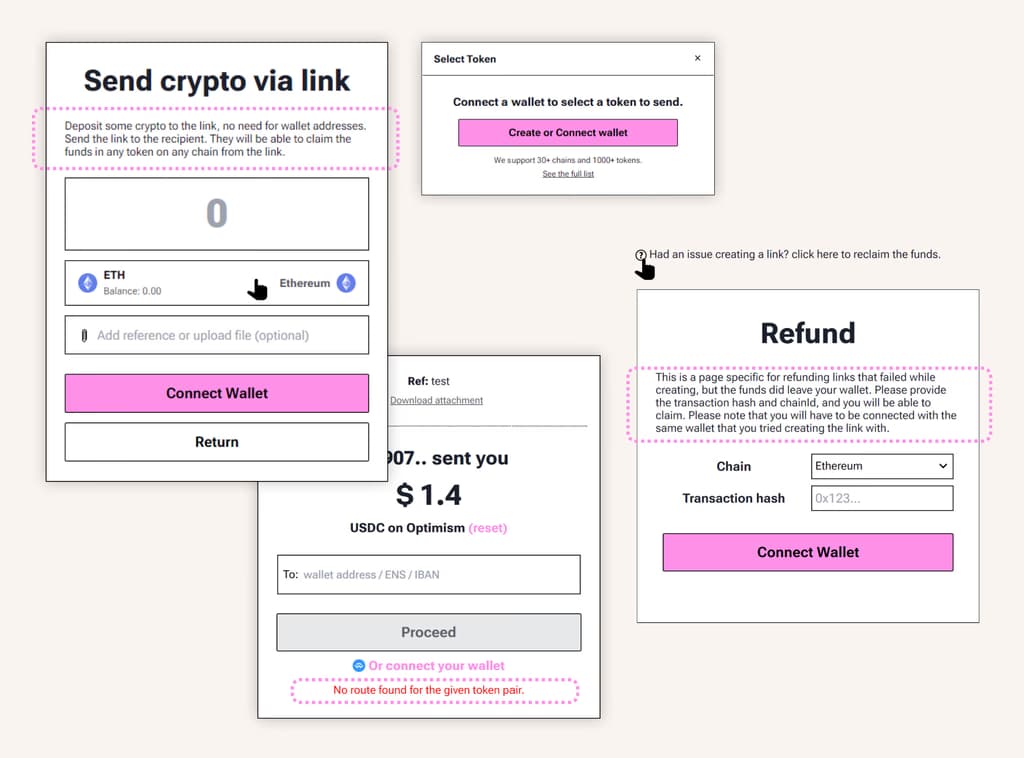
- ✓How might we emphasise the CTA? Used colour and proximity to differentiate CTA from other contents, with highlighted text and consistent pop-up alignment.
- ✓How might we reorganise token/chain selection to help users find the right option quickly?
- ✓How might we build user trust in transactions? Added a review screen with transaction details for both send and claim flows.
- ✓How might we encourage users to use the swap feature while claiming? Incorporated swap as a subtle option rather than a forced choice.
Design system and accessibility
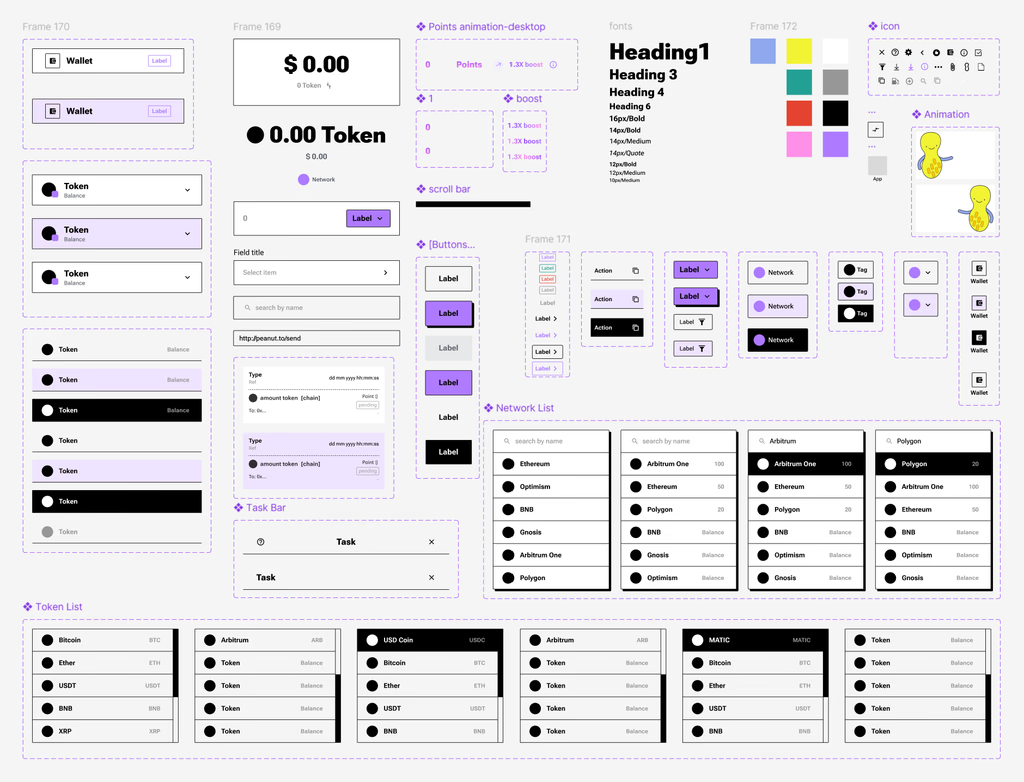
- ✓Created a scalable design system based on the existing UI kit with auto-layout components for responsiveness.
- ✓Checked all components through WebAIM to ensure WCAG 2.1 Level AAA standards.
Testing and iterations
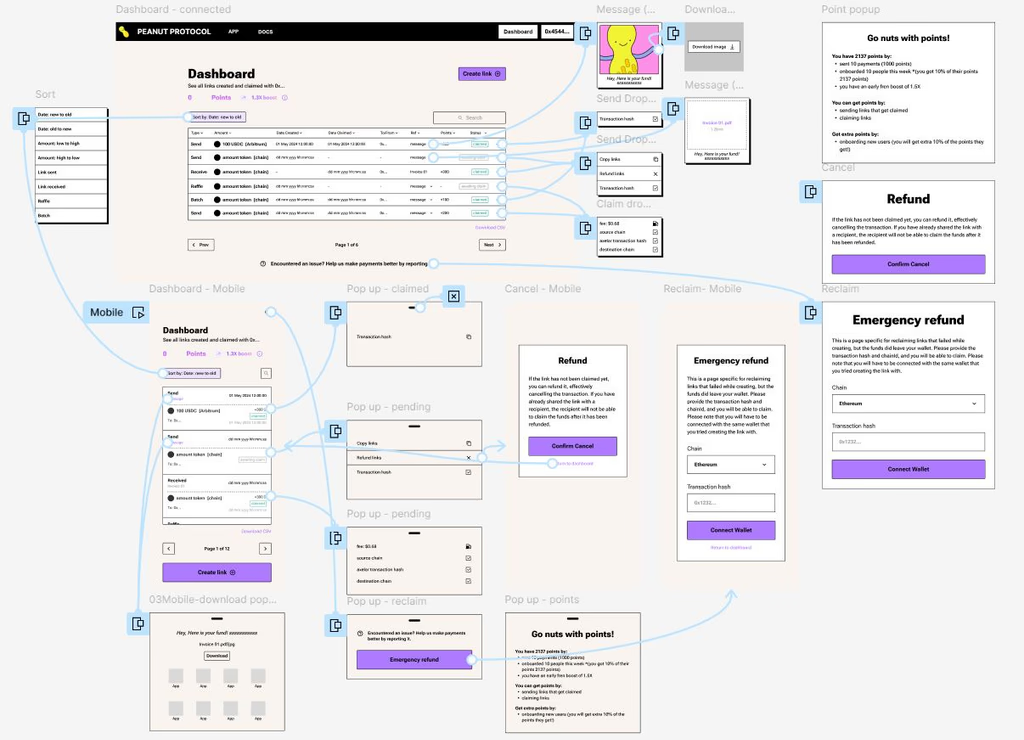
- ✓Conducted several user testing sessions to evaluate prototypes, identifying three key improvement areas: lack of guidance, CTAs that do not fit all users, and need for transaction detail management.
- ✓Added consistent copy and titles throughout the user flow, plus a pop-up screen to guide users to connect their wallet before sending.
- ✓Changed claim CTA to make it flexible for both new and already-connected users.
- ✓Designed a dashboard for users to manage assets and track send/claim activities.
Reflection
My Contribution
- –Convert user research and user test feedback to actionable design iterations.
- –Create wireframes and prototypes.
- –Develop a scalable design system with accessibility standards.
- –Work closely with the product manager and front-end developers to meet KPIs.
Challenges & Takeaways
Shipping features is a team sport
The UX audit took six weeks. Explaining designs to developers, making decisions with the PM, and pushing development forward taught me how to communicate, prioritise, and compromise effectively.
Explore alternatives to find better solutions
Since the product focuses on Web 3.0 technology, the PM often brought feature ideas. I learned to understand their reasoning and found that exploring multiple design iterations consistently leads to better outcomes.