4D+ Hackathon
The London 4D+ Hackathon was an intensive, multi-disciplinary event to accelerate product discovery for Bentley Systems' SYNCHRO+, the next generation of SYNCHRO products, by validating user-voted challenges through collaborative design and rapid prototyping. I led research to define the hackathon's four key themes through a survey of 60 people, 9 user interviews, and 2 internal workshops. By the end, we had full team buy-in and a clearer picture of what mattered most: performance, a simpler interface, and smarter workflows.
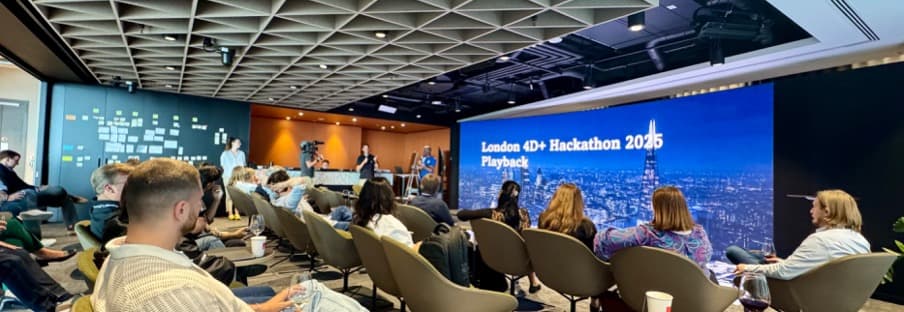
Overview
The Problem
Traditional product discovery often becomes sequential, creating significant time lags as ideas move between business, users, and technology teams. This delay increases the risk of building the wrong thing—features that lack business viability, user value, or technical feasibility.
The Goal
Our primary objective was to accelerate discovery by identifying and validating the most impactful user challenges and ideating solutions in a safe, high-velocity environment. We defined success by achieving three pillars: User Value (solving real problems), Business Viability (making sense for the organisation), and Technical Feasibility (confirming it can be built).
60+
Users participated in research
4
Dedicated ideation themes & teams
4.5/5
Participant satisfaction score
The Solution
Accelerated Discovery Framework
Replaced sequential hand-offs with parallel collaboration across business, technology, and user teams.
Direct User Involvement
Brought users directly into the ideation process to provide immediate feedback on prototypes and experiments.
Validated Product Roadmap
Ensured the resulting product roadmap was grounded in validated user needs rather than assumptions.
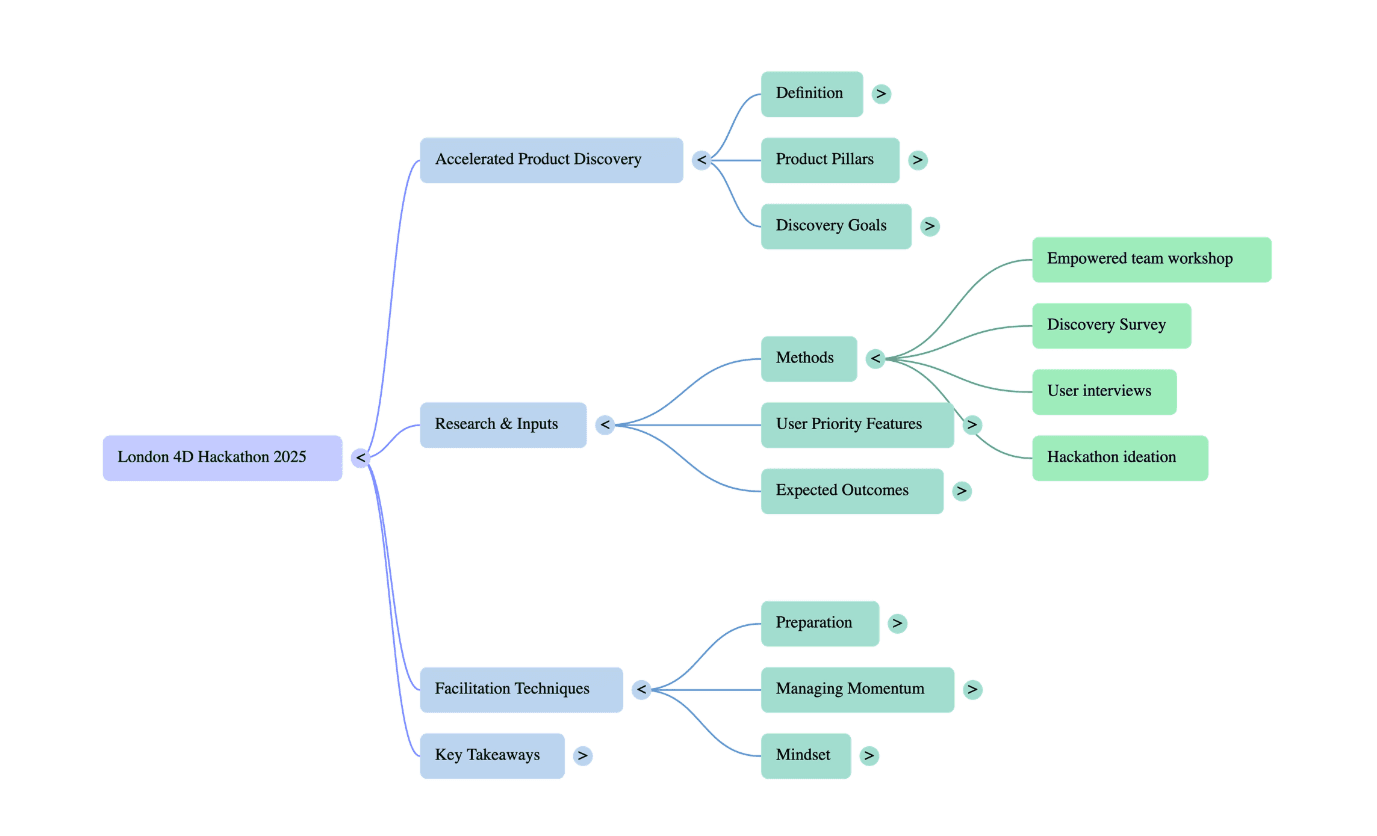
Process
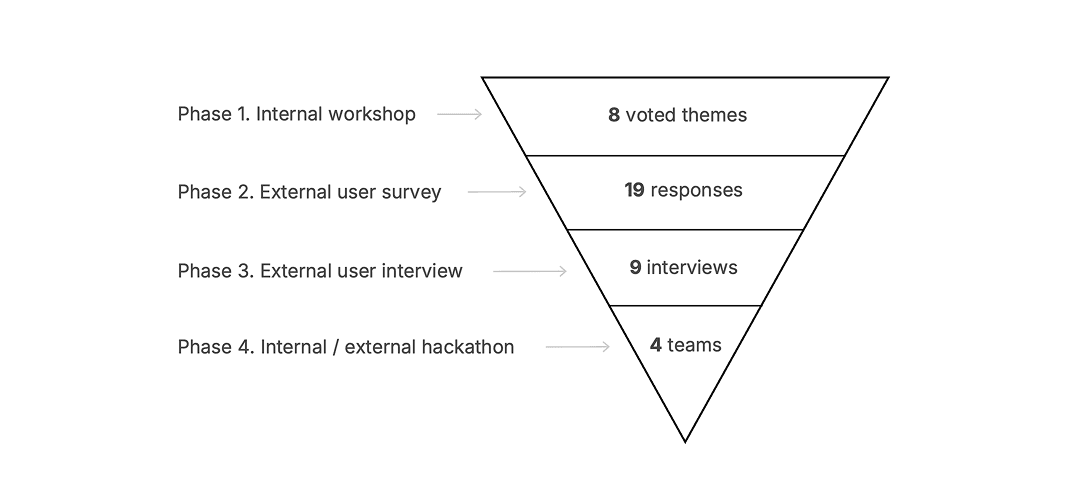
A funnel-structured discovery process — continuous research and ongoing user engagement across 4 phases.
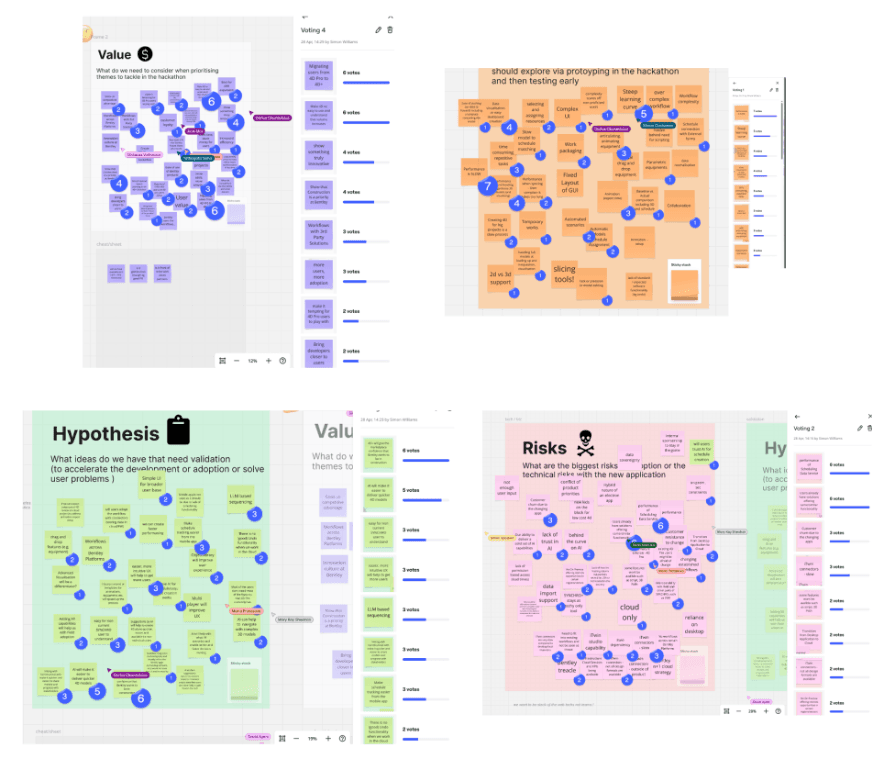
Phase 1: Internal Foundation and Theme Selection
- ✓Brought together past product insights in a remote workshop with SMEs and product team
- ✓Analysed past research to vote on user challenges, hypotheses, potential value, and associated risks
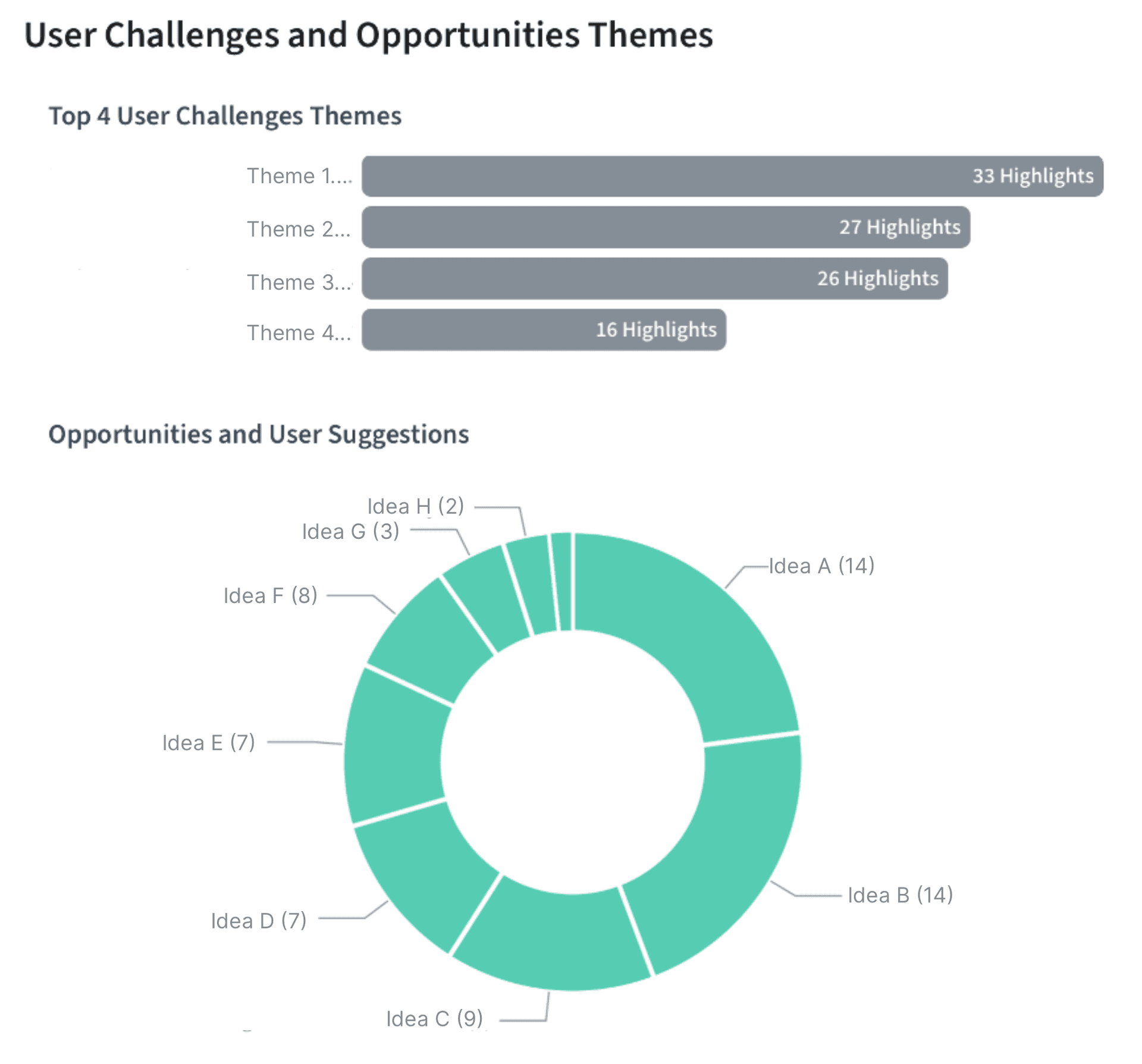
- ✓Selected 8 core themes to be validated externally
Phase 2: Targeted Quantitative Research
- ✓Distributed a tailored survey to a balanced cohort of 30 managers and 30 users
- ✓Used responses to validate internal assumptions and prioritise the strongest themes
Phase 3: Qualitative Deep Dives
- ✓Used survey results as a screening tool to select 9 participants who expressed strong support for specific themes
- ✓Conducted in-depth interviews to reveal the 'why' behind the data and uncover critical pain points
Phase 4: The 2-Day Hackathon
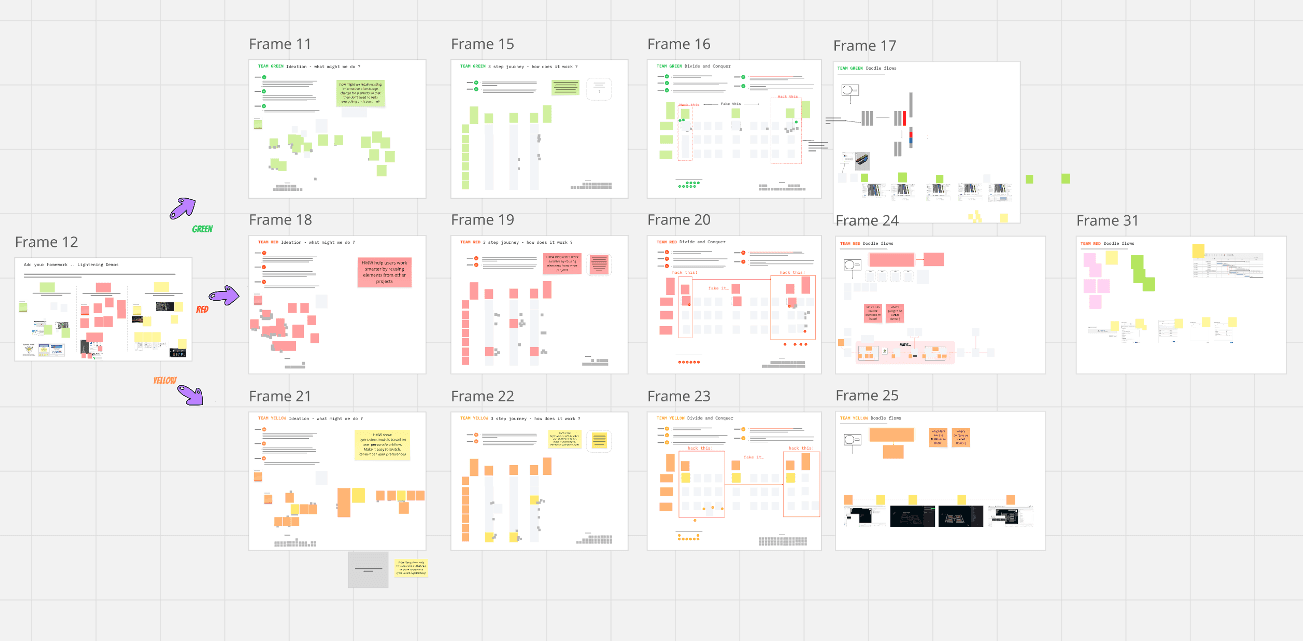
- ✓Assigned the top four user-voted themes to four cross-functional teams
- ✓Environment Control: managed space, temperature, and logistics to maintain momentum
- ✓Managing Tension: used 'parking lot' phrases to redirect off-topic conversations without stifling creativity
- ✓Embracing Imperfection: encouraged a scrappy mindset where experimentation was valued over flawless execution
Reflection
Challenges & Takeaways
Play fuels creativity
Incorporating a playful nature into presentations and ideation allowed for more creative risk-taking, which is often missing in traditional corporate discovery.
Empathy is the real output
The hackathon's greatest success wasn't just a feature list, but the dramatic increase in empathy between tech, design, and end-users. Everyone became a designer for 48 hours.
Discovery is a daily practice
The event proved that discovery shouldn't be a one-off event but a daily activity owned by the entire team to maintain pace and relevance in a fast-moving market.
Users want less friction, not more features
Users aren't asking for more features; they're asking for friction to be removed from the ones they already have. Performance and UI simplicity are the primary drivers of adoption.
Feedback
This is not like anything I've ever been to before. I flew in yesterday and landed this morning at 6:30 a.m.; I didn't sleep on the plane, but the vibe, the enthusiasm, the excitement kept me energized—it's been a really cool experience.
Very well organized. I enjoyed it immensely and learned a lot about what users need and ask for.
It says a lot about Bentley that they're really investing in the end-user experience and want feedback from the people using the product.
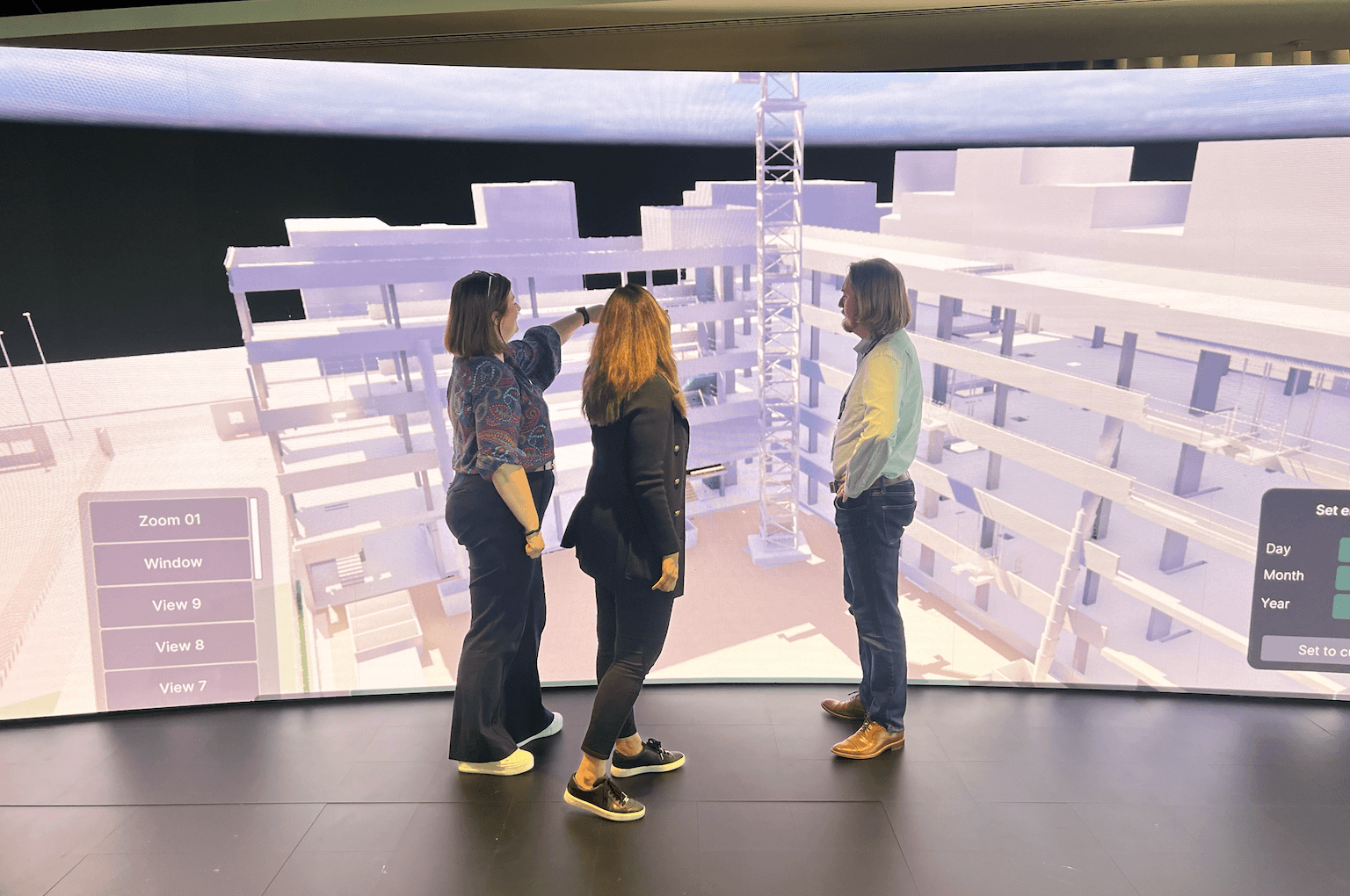
The event was a powerful blend of innovation, collaboration, and cutting edge technology, all focused on tackling real world project challenges.